By John Ferrandino
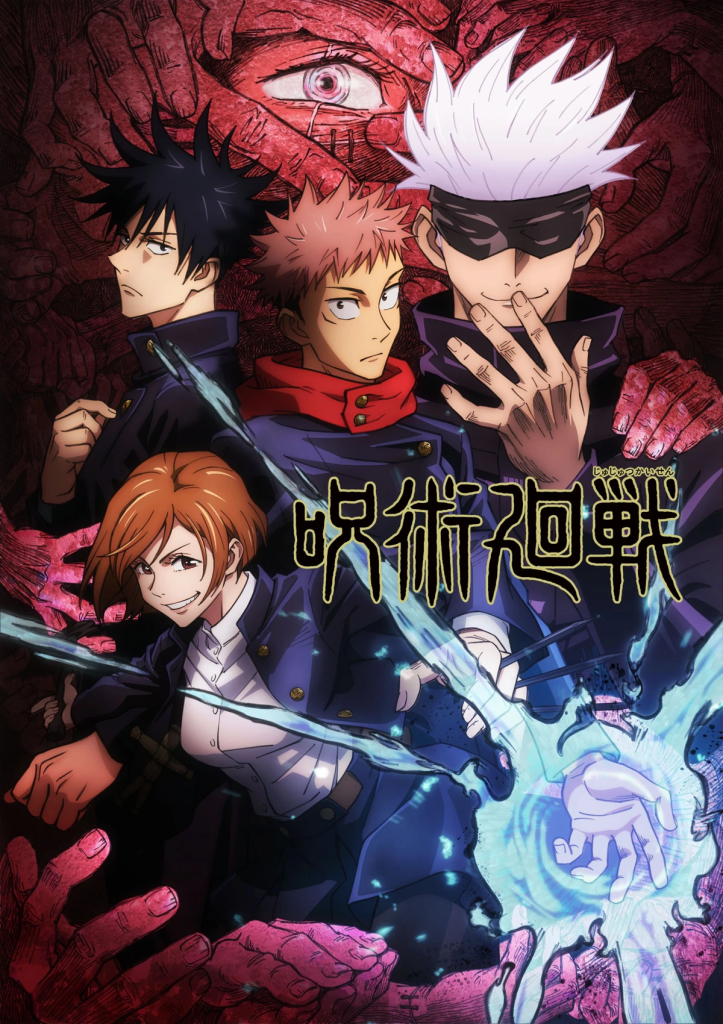
Characters: Yuji Itadori, Satoru Gojo, Ryomen Sukuna, Megumi Fushiguro, Yuta Okokstu, Nobara Kugisaki, Maki Zenin, Suguru Geto, Mahito, Toji Fushiguro, Kento Nanami, Choso, Yuki Tsukumo, Naoya Zenin, and Kenjaku
Plot: Cursed energy is the negative emotions of humans. They accumulate to form cursed spirits that feed on humans. Jujistu sorcerers defend Japan from these cursed spirits, manipulating cursed energy into cursed techniques. A boy named Yuji Itadori comes into possession of a cursed object, a mummified finger of the King of Curses, Ryomen Sukuna. He eats it in order to defend his friends, and becomes a vessel for Sukuna. He becomes a student for the most powerful sorcerer, Satoru Gojo. Itadori will eat all twenty finger in order to be executed and destroy Sukuna’s soul. Meanwhile, a cursed spirit possessing the corpse of Suguru Geto, named Kenjaku, prepares for the sealing of Gojo, in order to commence the culling games, a cleansing of humanity for a golden age of cursed spirits.
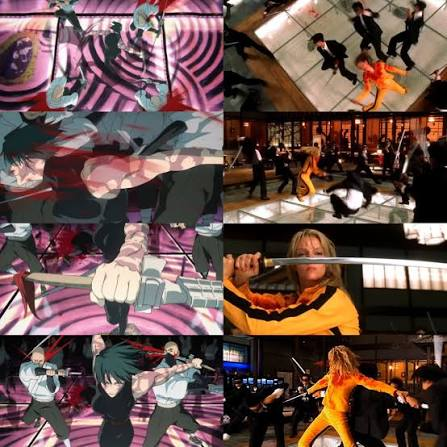
Inspirations: Nihon Shoki, Buddhist mudras, western cinema, rationalism, Japanese urban legends, Shintoism, Hinduism, Bleach and other supernatural manga classics, nihilism, altruism, statistics, calculus, probability, and game theory
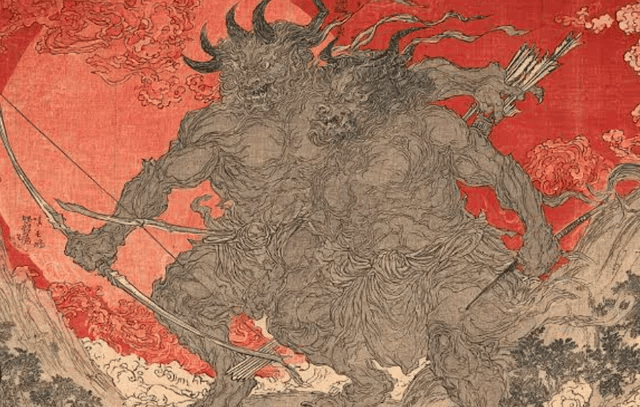
Ryomen Sukuna was a real historical mythological figure from the modern day Gifu prefecture, dating back to the Nara period and previous eras. Japans early historical records mixed history and mythology in order for divine legitimacy to be applied to the emperor. The emperor was of the lineage of Amaturastu, the queen of heaven and the sun, so any rebellious lord would be casted as a demon. Thus the lord of Gifu (then known as Hida), Ryomen Sukuna, was recorded as a demonic tyrant in the Nihon Shoki, but in local texts is a robin hood figure, fighting against court corruption. This figure is described as having two faces and four arms. A more recent source of Sukuna is an urban legend of a cursed mummified baby with multiple limbs. It was mummified because it was a conjoined twin, and became the object of worship for a cult. This is the basis for Sukuna’s fingers and his main body being mistaken for a mummified Buddha.
This society of the Jujistu world is a continuation of feudal Japan; patriarchal, rural, and power centered around hereditary clans and the warriors that served them. Yuta Okokstu, one of Gojo’s students, is a descenant of the real life Fujiwara clan which ruled both Japan and the jujistu world during the Heian period.
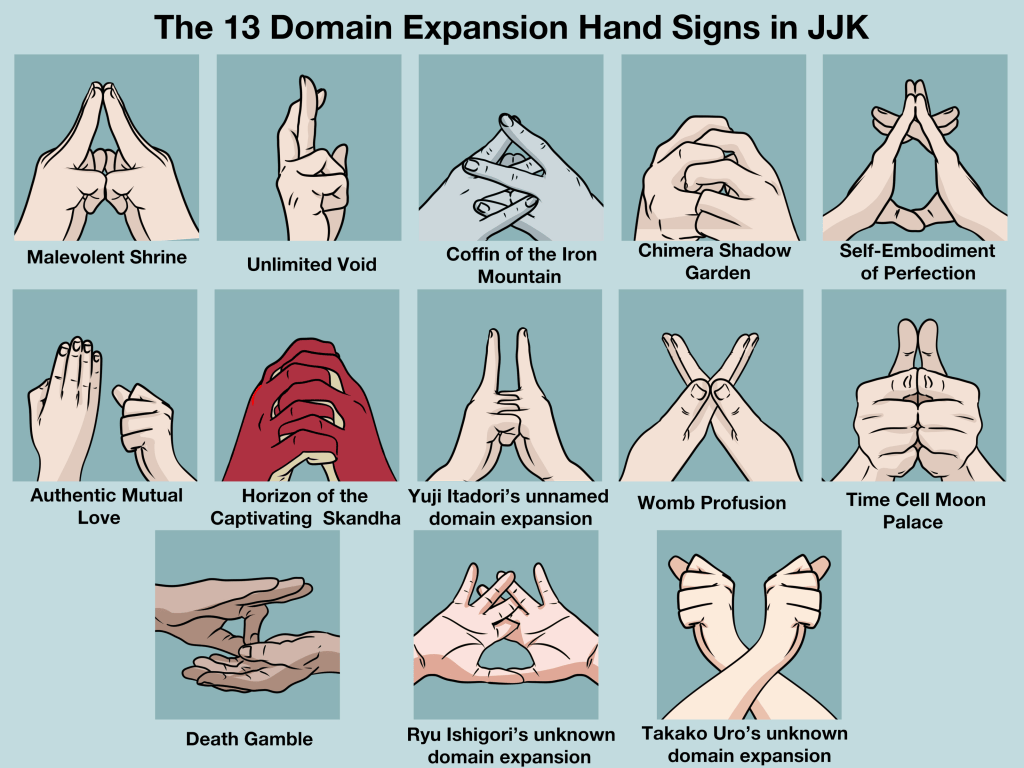
Shintoism and Buddhism are the biggest faiths in Japan and in JJK, are the basis behind Itadori’s siblings, the Death Womb Paintings, Fushiguro’s shadow shikigami, various cursed spirits, and the hand signs for domain expansions, based on Buddhist mudras.
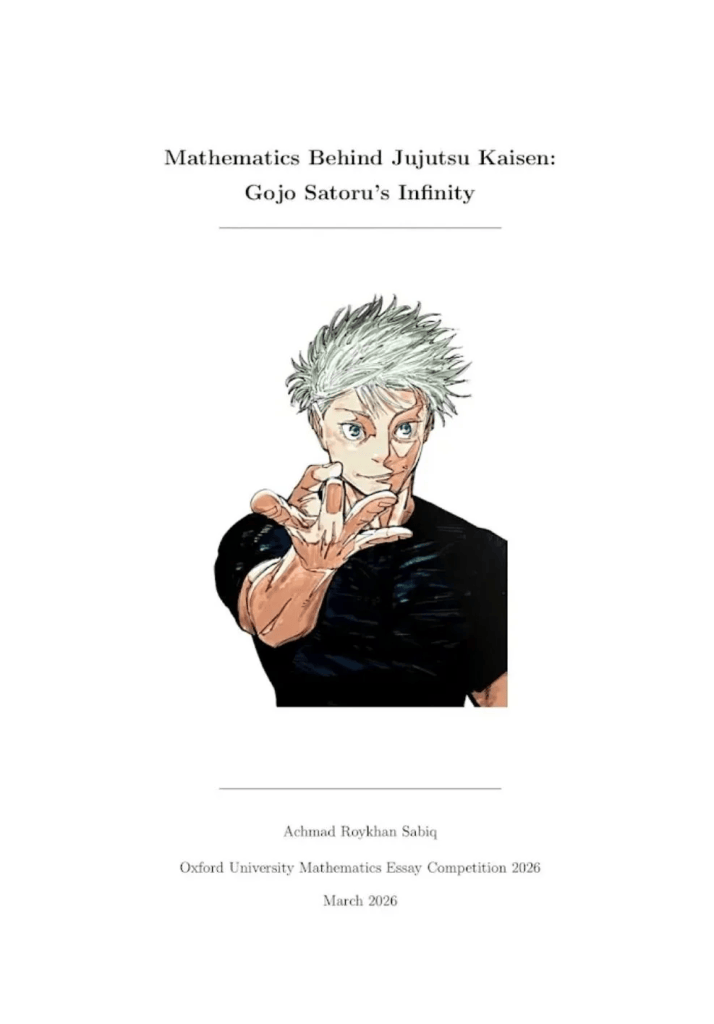
A common motif in most manga and anime os the power system, and the way cursed energy combat works is game theory. The success of your move is based on the move of your opponent. Cursed energy in a fight finite, so measuring cursed energy in a fight can be measured with algebra. Gojo’s infinity technique is a real life application of infinite division. On a graph, a non-linear equation was an asymptote of zero has the line never approach zero. Whatever the value is for ‘x’, will never touch zero.. This is how Gojo’s technique works by constantly dividing the space around him. An attack cannot touch him. There is a peer-reviewd Oxford paper explaining Gojo’s infinity.
The fights in JJK are some of the most rational, analytical, and empirical of the medium. Gege Akutami citesBleach and Hunter X Hunter as the basis for the power system of JJK.
Motifs: Dualism, biological and spiritual horror, “cog ” identity, outcasts, souls, game theory, Buddhist mudras, mathematics, Buddhist symbolism, shrines, and scars
The pacing og the manga and anime is fast paced and plot driven. There is no fan service or plot armor and the narration is in third person, post mission report and feels like a history book. This is a tribute to the origins of the main villain, Ryomen Sukuna, from the Nihon Shoki, a historical text. This allows for battle analysis narration, multiple pov’s, game theory comparisons, and character expositions. The wide narrative and national and global stakes can put this in the genre of historical epic. It can also be classified as horror; with eerie atmospheric music, muted color, gore, supernatural creatures, nilhism, depression, and frightening imagery.
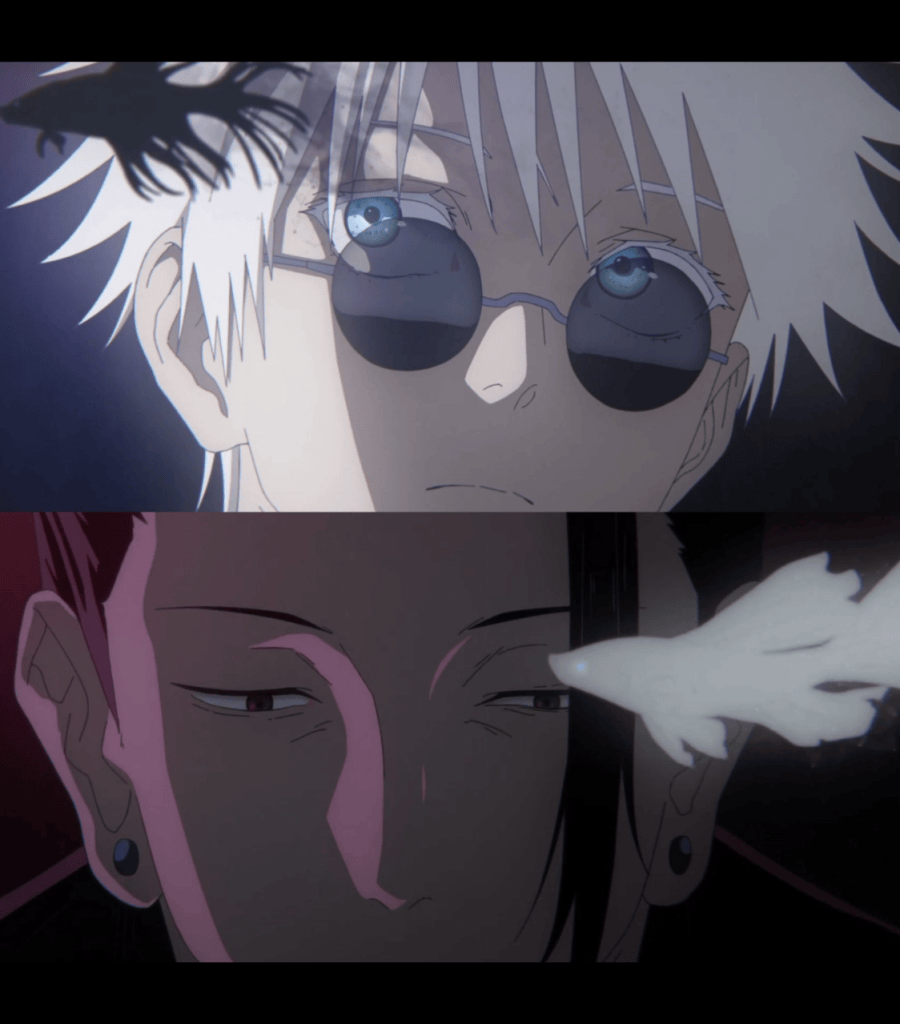
In the anime opening for the Hidden Inventory arc, a white and black fish represent Gojo and Geto respectively, showing their drifting apart in morality. The species of the fish are known for their bitter fighting.
Lineage is a major factor in the power system. Cursed techniques are inherited and Yuji is a product of Kenjaku’s eugenics project lasting for a millennia. Twins share a soul, so the cursed energy is split. The twins Maki and Mai Zenin have their abilities hindered by sharing a soul. Maki’s heavenly restriction is not fully evolved and Mai’s cursed energy output is reduced to obsolete during a fight. Its only when Mai is killed that Maki reaches her full potential.
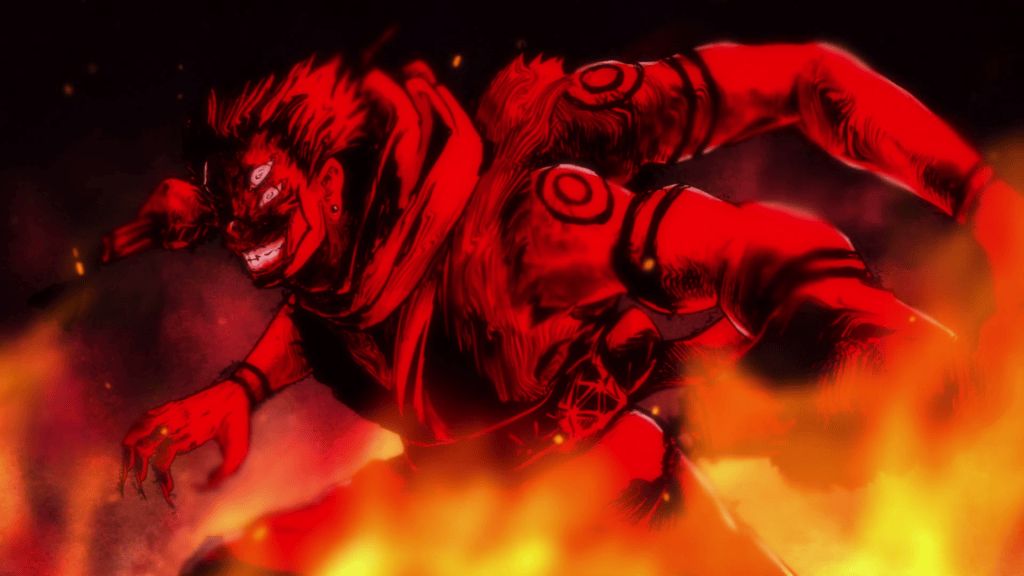
Sukuna is another twin example. His mother was under extreme malnutrition, so while in the womb, he absorbed his twin, resulting in him having vast amounts of cursed energy. He was born with four arms, bone fragments poking out his head, two eyes on the right side of his face, and a massive mouth on his stomach, giving him a advantage in casting cursed techniques, but his demonic appearance resulted in fear and hatred from everyone, turning him into a cursed spirit. Sukuna’s birth has precedent in conjoined twin cases, and his signature full torso tattoos are marks given to criminals in feudal Japan.
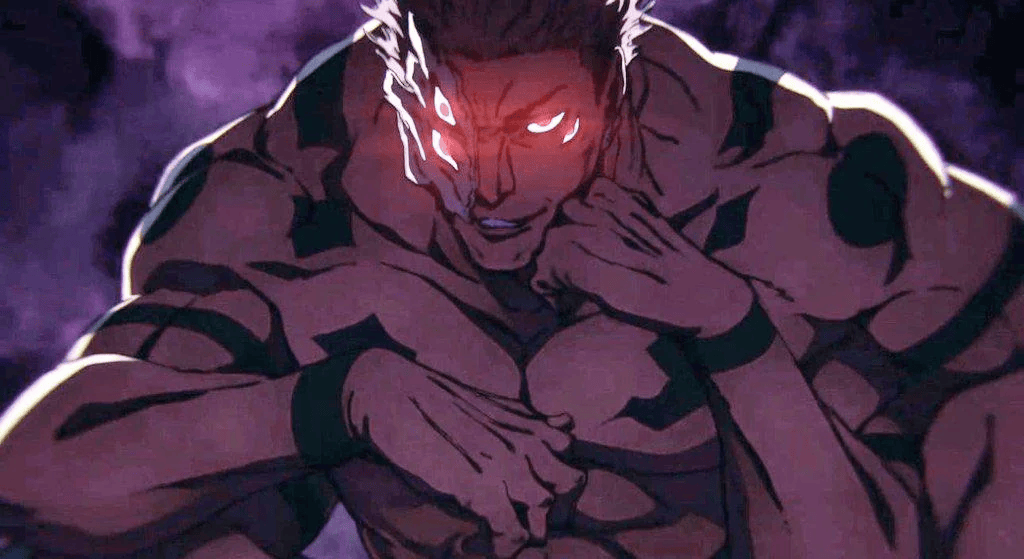
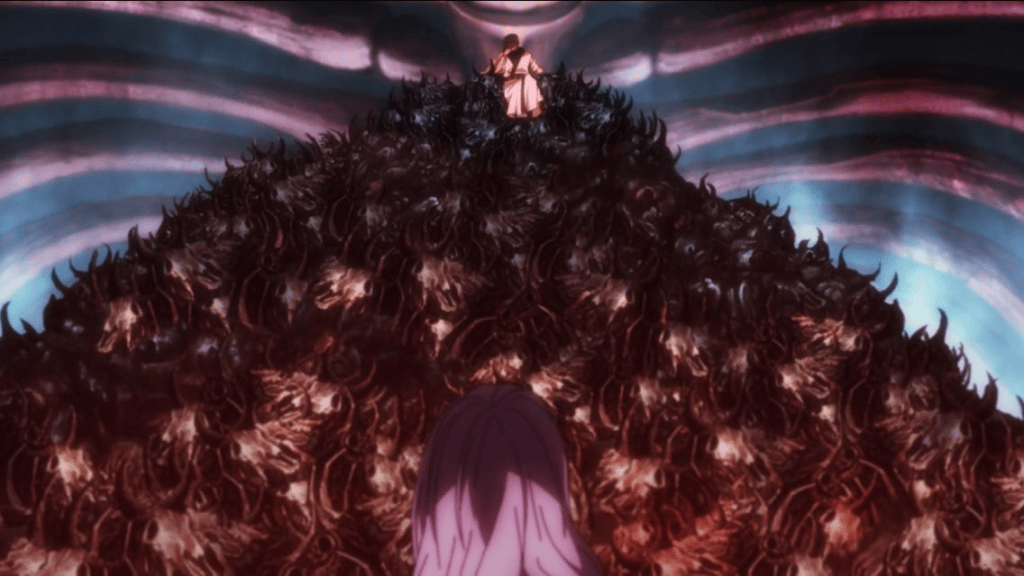
The Sukuna from the Nihon Shoki and urban legends might have been based on a real life figure who was a conjoined twin and his tale was embellished with demonic origin by the time of the Nara period. He is a Frankenstein’s Monster of a man who could not find love, so he inspired fear. He sees humans as cattle to amuse him, shown with his innate domain containing piles of human skulls mixed with ox skulls. Itadori’s grandfather is a reincarnation of Sukuna’s twin, making Yuji his grand nephew. Sukuna only rose after his twin’s passing.
As Yuji continues to fight, his scars start to resemble Sukuna’s facial tattoos, and he becomes more powerful than him and Gojo, making him the replacement cog for Sukuna’s and Gojo’s niche. Markings like a tiger.
Conflicts: Cynicism vs altruism, hedonis, sexism, ideological shock, loss of individualism, game theory, burnout, natural selection and homeostasis, sonservatism vs progressivism, trauma, survivors guilt, and soul vs matter
The conflict starts with Kenjaku’s scientific curiosity with the limits of humans and cursed spirits. He makes binding vows with ancient sorcereres to participate in the culling games, including Sukuna, in order to weed for the most powerful cursed energy users for a curse filled world.
Satoru ojo and Suguru Geto were the strongest and the ideological light of the jujistu world. Then on the star plasma mission to protect Riko Amanai, she is killed by Toji Fushiguro, hired by regular humans Gojo and Geto had sworn to protect. After a classmate, Yu Haibara, was killed, and Geto rescued two girls being abused for being sorcerers, Geto adopted a new ideology of killing all sources of currsed spirits, humans, who would never know of them and their regular lives are no better, being directed by the elders and major clans, who are misogynistic, greedy, arrogant, and uncaring for the weak. This environment produced Sukuna and Toji Fushiguro. Toji was a exiled Zenin, one of the three major clans, a misogynistic and abusive family for non-curse users, the Heavenly Restricted. Toji saw himself as disposable and became a mercenary.
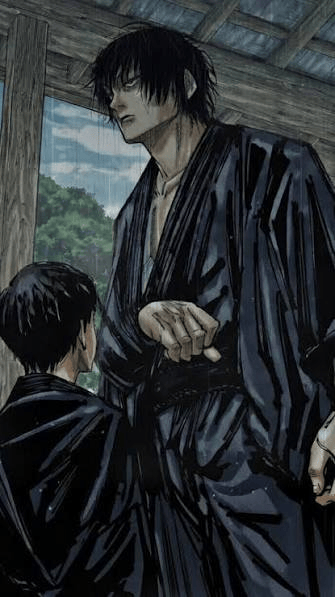
Kento Nanami, another friend of Gojo and Geto, leaves jujistu society due to Haibara’s death, and doesn’t blame Geto for his change. Mentoring Yuji reminds him of why he became a sorcerer. Yuji shares the altruism of Gojo and Geto, but his manifests as self-sacrificing for others.

The higher ups purposely send him on a mission to kill him, just for Sukuna to resurrect him. Yuji’s goal is to save people in orderr for them to die a natural death and to be surronded by friends on his deathbed. But he is Kenjaku’s son, and Sukuna’s vessel, so his fate was determined before he was born. While Sukuna was in control, he destroyed most of Shibuya, killing thousands. His mentor Gojo is sealed and Nanami killed. Sukuna eventually takes control of Yuji’s best friend, Megumi Fushiguro, and kills Gojo. Yuji consumes his half siblins in order to defeat Sukuna.
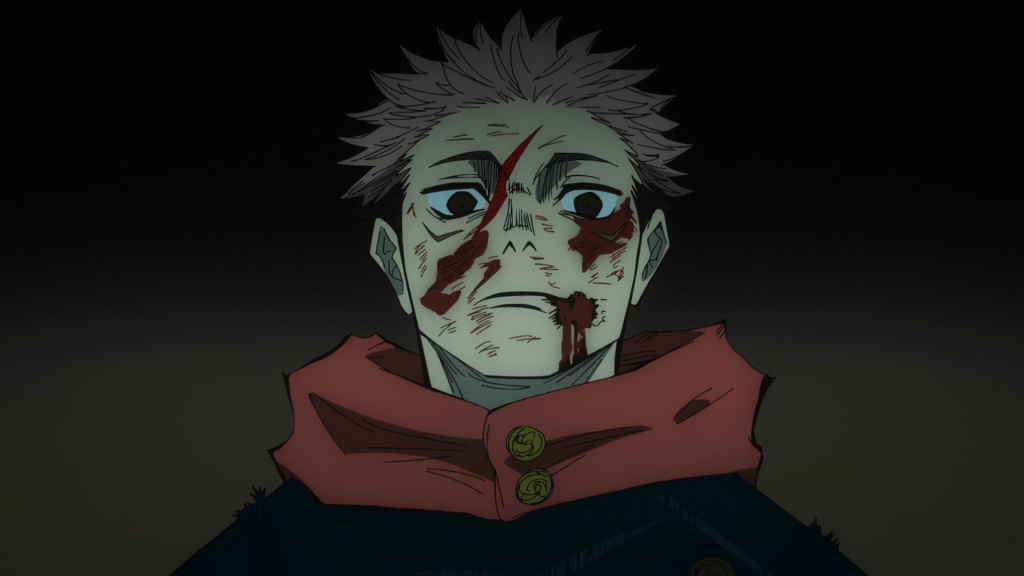
By the end, he stilll offers Sukuna mercey, but SUkuna has only ever known the life of a curse, so he chooses to die as a curse. Yuji surpasses Sukuna and Gojo, becoming ageless, containing the power of Sukuna, blood manipulation, blach flash, and reverse curse technique. He forsakes normal mortality in order to save others.
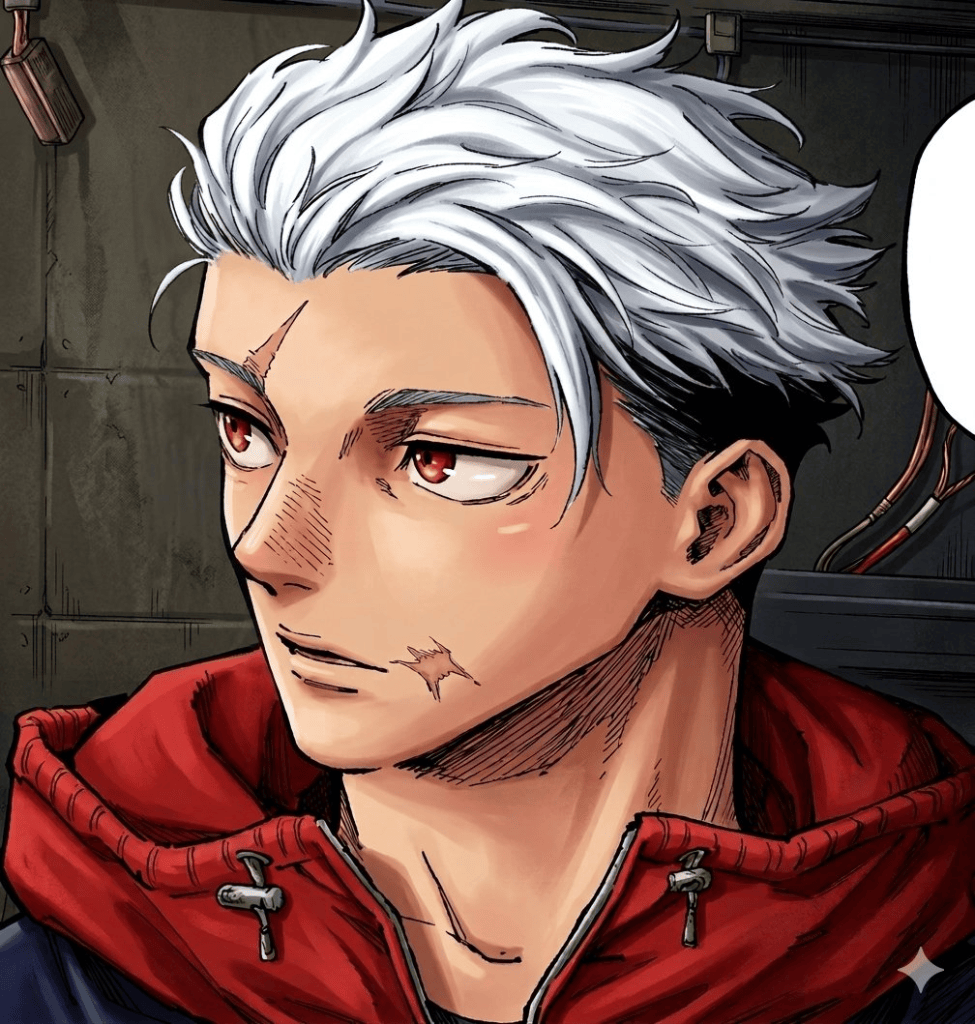
Yuki Tsukumo has the same goal as Geto, to eliminate curses, but chooses to focus on studying cursed spirits and refuses to take missions. She becomes an ally to Yuji and grows close to Yuji’s half curse half brother Choso. She wills her notes to Yuji who continues hers, Geto’s, and Choso’s mission after their deaths.
Megumi Fushiguro is the most cynical of Gojo’s students, fighting to only protect his sister, who he ends up killing as Sukuna.
Yuta Okokstu is the one who defeated Geto and posseses the cursed spirit of his sociopathic childhood friend, Rika. He is willing to becoem the monster like Gojo, but grows old with his wife Maki and their family.
Sukuna just kills people for fun or getting in his way, but Yuji is the one he hates to his core, because his beliefs are counter to his. He respects strength, such as Gojo, who he kills, but acknowledges as a human, not a weapon.
Even though Gojo kills Geto to proect Japan, Gojo kills all of the higher ups after being unsealed after they order the deaths of some of his students. He is treated as a weapon by jujistu society, which distances him from his surviving friends, Shoko, Utahime, and Nanami.
Yuji’s nemesis is Mahito, because he is the manifestation of humanity’s fear and hatred of itself. Its in his fight with Mahito in the ruins of Shibuya that Yuji accepts that he is just a cog. 86 years later, Yuji defeats him for good and absorbs his ability, soul manipulation, in order to alter the souls of humans to no longer secrete cursed energy, ending the struggle against curses for good.
Sukuna allies with Kenjaku only out of boredom, killing the most people, and breaking Yuji.
Kenjaku’s endgame is to merge the cursed energy of the jujistu god, Tengen, with all of the Japanese people, turning them into cursed spirits. He discovers how a jujistu sorcerer’s brain in different from a regular human, using Mahito’s idle transfiguration to change regular people into sorcerers.
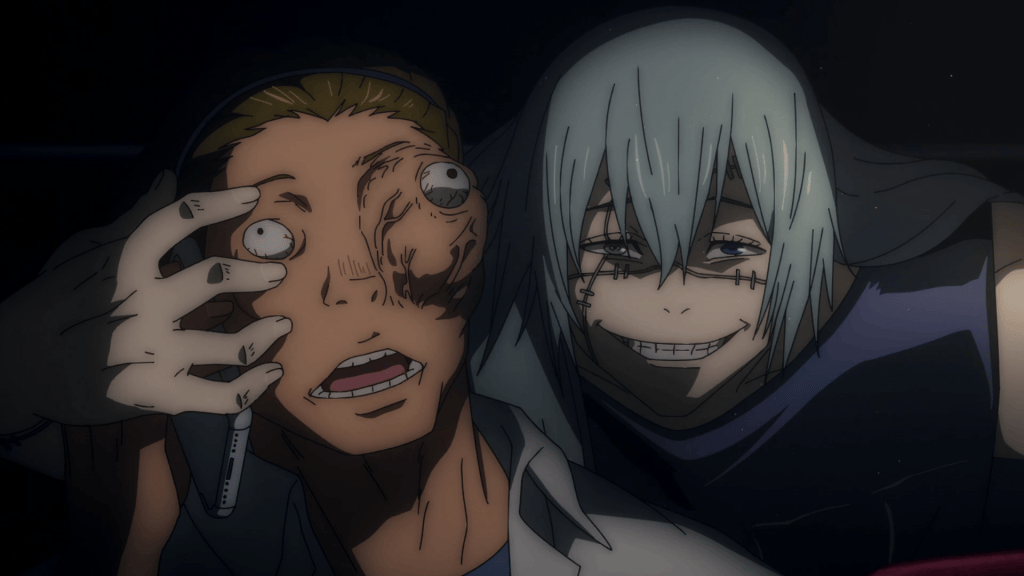
Binding vows are a literal a literal game code, since thet are used to create the culling games. Cursed energy is a random and chaotic force, making rules to create more advanced techniques, like a writing system for a lanuage. Cursed energy is the language of human psychology.
The fights are won through cunning and strength, not determination like most manga and anime. Most of the cast ends up with permanent scars throughout the story, Tokyo becomes a permanent cursed spirit nest, swarths of the population are killed or kidnapped during Shibuya and the culling games, Sugura Geto’s body is desecrated, and Yuji is never able to fulfill his promise to his grandfather.
Victory is not justice, but survival.
“I’m you”-Mahito to Yuji, mocking his cause as he has the same goal, but for cursed spirits
“At the end of this marathon is our comrades’ corpses”-Suguru Geto’s breaking point
“Stand proud, you are stong.”-Sukuna to his opponents, respecting their strength
“Are you the strongest because you’re Satoru Gojo, or are you Satoru Gojo because you’re the strongest?”-Geto questioning Gojo’s responsibilities, since everyone else sees him as a weapon, not a human.
Unlike other shonen, endurance and determination don’t win a fight, but strength and intelligence. Mathematically understanding the opponent’s technique makes for increased survival.
Themes: survival of the fittest vs survival of the friendliest, power of rationalism, absolute power is lonely, creating fate, fulfilling the philosophy of Nietze’s Thus Spoke Zarathustra, stoicism and nihilism in the face of tragedy, balance in nature, challenges of altruism, fear of the monster, triumph of sacrifice, destruction of defunct institutions and culture benefits the next generation, and ignoring emotions in favor of institutional functionalism creates disillusionment.
Japan has a admiration, syncretism, and compatibility with German culture. Mangakas have German motifs and influences in their manga. Their is even a a Swedish model who inpired the character design of numerous manga characters of Aryan design. Gege Akutami’s German motif in JJK is the most famous German philosopher, Friedrich Nietzsche’ superman as Ryomen Sukuna and Yuji Itadori, men who become gods throught their own efforts in the absence of a higher order.


Leave a Reply